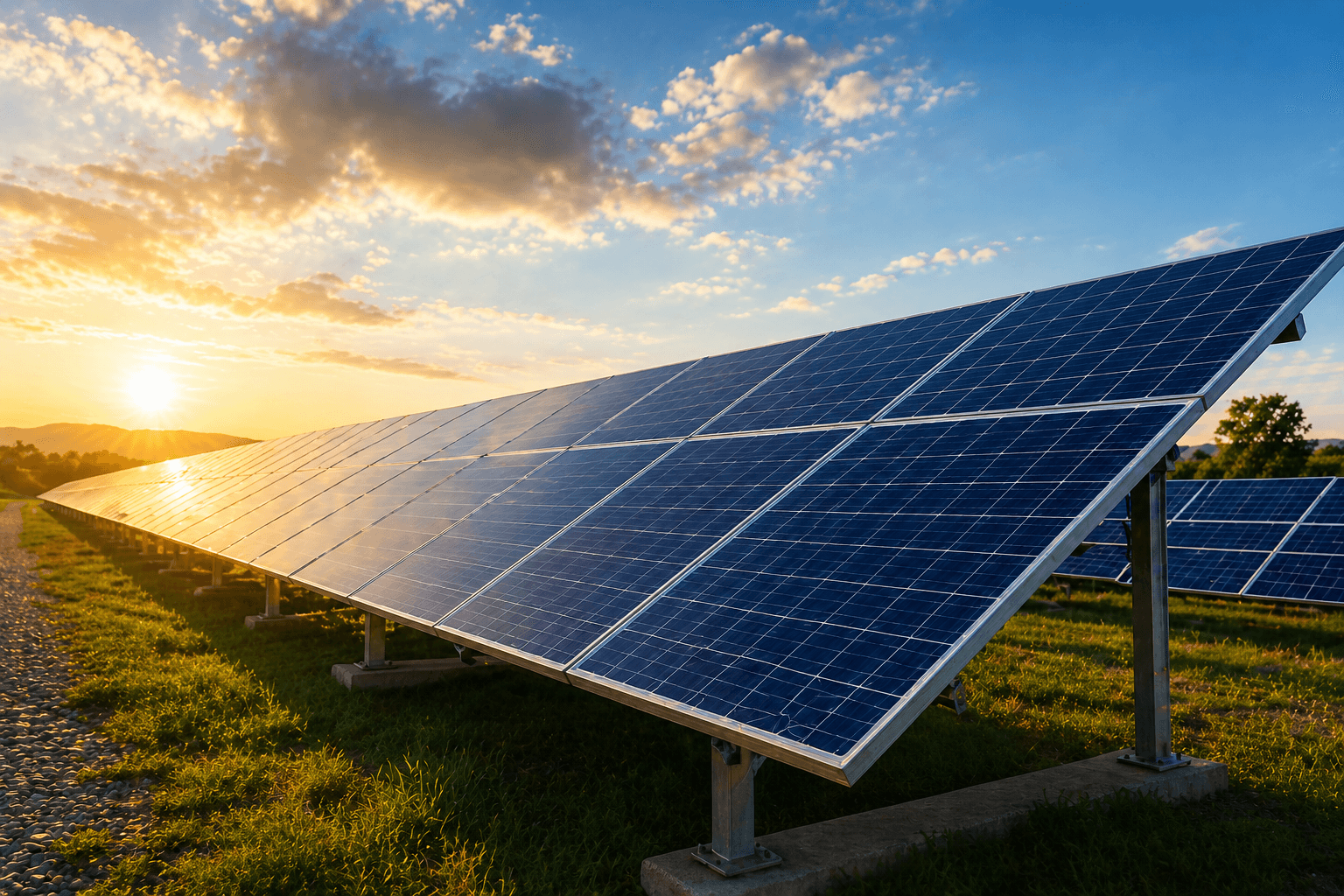

Türkiye has demonstrated remarkable growth in solar energy investments in recent years. Considering the increasing installed capacity, licensed and unlicensed solar energy projects, rooftop applications, systems integrated into industrial facilities, and medium-term capacity targets, the Turkish market has become, for foreign investors, not only a growing energy market but also an investment field requiring long-term legal and commercial planning. However, while solar energy investments are often assessed in terms of generation capacity, licensing procedures, land allocation, grid connection opportunities, incentives, and financing models, the legal regime applicable to end-of-life solar panels, the interpretation of their waste status, and the manner in which investors’ end-of-life obligations should be addressed are often pushed into the background. Yet, particularly in fast-growing markets such as Türkiye, this issue constitutes an important compliance and risk area that is likely to become more visible in the near future.
For foreign investors, the key question is this: Is there a clear and applicable legal framework in Türkiye governing end-of-life solar panels? The short answer is yes; however, this framework does not exist in the form of a specific “solar panel waste law.” Rather, it is shaped within the broader framework of environmental law and electronic equipment regulations. Therefore, the legal situation in Türkiye is not, at first glance, an area characterized by a complete regulatory gap. The real issue lies in properly interpreting the fragmented structure of the existing legislation and correctly identifying at which stages of the investment lifecycle specific rules become applicable.
Under Turkish law, the principal legal basis in this field is the Regulation on the Management of Waste Electrical and Electronic Equipment, dated 26 December 2022. As also reflected in public statements made by the Ministry of Environment, Urbanization and Climate Change, this regulation establishes a framework that covers not only the prevention of waste electrical and electronic equipment, its separate collection, recovery, and recycling, but also an extended producer responsibility approach for producers and entities placing such products on the market. From the perspective of foreign investors, the most significant aspect of this Regulation is that photovoltaic panels are expressly included in the relevant annex lists. In other words, in Türkiye, photovoltaic panels are not treated at the end of their useful life as ordinary construction waste or general equipment scrap; rather, they fall within a category that must be assessed under the waste electrical and electronic equipment (WEEE) regime.
This finding is highly significant in practice. Foreign investors often focus, when entering the Turkish market, on the importation, installation, and commercial sale of solar panels, while postponing consideration of the product’s end-of-life legal status to later stages of the operation. However, under Turkish legislation, not only the placing of the product on the market, but also the end-of-life phase of the product may become a matter of legal scrutiny. Therefore, for foreign actors supplying panels to Türkiye, selling through local distributors, establishing projects under EPC models, or developing project portfolios as investors, legal due diligence should not be limited solely to energy legislation. Environmental law, the electronic equipment regime, product compliance requirements, and contractual liability layers must all be assessed together.
At this point, the issue that deserves particular emphasis is that Türkiye’s WEEE approach should not be reduced to a simplistic logic of “waste is disposed of once it arises.” The existing framework is built around a producer-responsibility-oriented perspective. Accordingly, for foreign investors, the critical question is not so much where the panel is technically manufactured, but rather through which legal channel it is placed on the Turkish market, which legal entity assumes the status of importer, how the relationship between the brand owner and the importer is structured, and how post-sale obligations are allocated in contractual arrangements. In practice, the principal legal risk often arises not from the existence of the legislation itself, but from the failure to clearly define the allocation of roles among market actors from the outset.
Another area that requires particular caution for foreign investors in the Turkish market concerns the movement of used or refurbished panels. In particular, with respect to dismantled field panels, refurbished modules, second-hand stock, or equipment with significant performance degradation entering Türkiye, the question of whether the goods genuinely qualify as reusable products or should in fact be regarded as waste carries serious legal significance. As expressly stated in the Ministry of Environment, Urbanization and Climate Change’s official 2022 announcement, the importation of used or refurbished electrical and electronic equipment is subject to certain minimum conditions, and it is essential to demonstrate that the goods do not qualify as waste. This approach serves as a critical warning for foreign investors, especially in the solar panel sector. Türkiye should not be viewed as a passive market that assesses used panel imports merely on the basis of commercial declarations. Technical testing, product lifespan, functionality, documentary evidence, and legal classification must all be assessed together. Otherwise, a shipment commercially planned as second-hand goods may produce materially different consequences under environmental law and the import regime.
On the other hand, the legal assessment of solar panel investments is not limited solely to waste management. In Türkiye, the Regulation on the Restriction of the Use of Certain Hazardous Substances in Electrical and Electronic Equipment must also be taken into account with respect to panels and related equipment. This regulation follows a structure parallel to the EU’s RoHS approach, restricting the use of certain hazardous substances. Public statements issued by the Ministry of Environment, Urbanization and Climate Change in 2024 also indicate that this regime has been updated in light of amendments in EU legislation. This is particularly relevant for companies operating within supply chains connected to Europe. Türkiye is not merely a country in which energy investments are made; it is also a jurisdiction that maintains commercial and technical regulatory alignment with the EU and demonstrates a degree of parallelism in terms of product compliance. For this reason, the correct legal approach for foreign investors should not be limited to the question of “what happens when waste is generated?” It must also include the broader question of “under which technical and environmental framework is the product assessed in Türkiye?”
The importance of this legal reading is further reinforced by the growth of Türkiye’s solar energy market. Energy sector data published by the Investment Office of the Presidency of the Republic of Türkiye demonstrate that the country has experienced significant capacity growth in solar energy and that combined wind-solar installed capacity targets are expected to rise further in the coming years. A market of this scale makes it inevitable that end-of-life obligations will become increasingly visible in the future. In other words, issues that may appear legally theoretical today are likely to become direct commercial and operational realities in the medium term. Particularly when considering large-scale ground-mounted solar projects, industrial rooftop applications, long-term maintenance agreements, and panel replacement cycles, the advance contractual and regulatory assessment of a panel’s end-of-life status can provide foreign investors with a significant advantage.
For this reason, the most relevant question for foreign companies planning solar panel investments in Türkiye is not: “Is there a specific solar waste law in Türkiye?” The more accurate question is this: Into which legal category does a panel placed on the Turkish market fall, which legislation becomes applicable at the end of its useful life, how is the boundary drawn between a used panel and a waste panel, how is liability interpreted between the importer and the brand owner, and how should these risks be reflected in EPC, O&M, supply, and sales contracts? Most investors are not seeking proposals for legislative reform; rather, they want to understand the obligations they will face under the current legal framework and how those obligations can be managed. For that reason, the value of legal advisory services in this field in Türkiye does not lie in proposing new regulations, but in being able to relate the existing regulatory framework to the commercial reality of the investment.
In conclusion, solar panel waste in Türkiye is not an unregulated area. Photovoltaic panels are recognized within the existing WEEE regime; official criteria exist for distinguishing between used products and waste; and, with respect to product content and hazardous substances, an EU-linked compliance logic is being followed. At the same time, Türkiye’s rapidly growing solar energy market indicates that this issue will become increasingly important for foreign investors. Therefore, for foreign investors supplying panels to the Turkish market, operating through local partners, developing projects, providing EPC services, or planning the movement of second-hand equipment, the primary need is not to debate changes to Turkish legislation, but rather to apply the existing legal framework correctly throughout the lifecycle of the investment. In Türkiye, a successful and sustainable solar energy investment should be assessed not only in terms of installed capacity or financial feasibility, but also through legal compliance planning that extends to the end-of-life phase of the asset.
References:
Investment Office of the Presidency of the Republic of Türkiye, Energy Sector Overview, available at: https://www.invest.gov.tr/en/sectors/pages/energy.aspx (Accessed 20.04.2026)
Republic of Türkiye, Ministry of Environment, Urbanization and Climate Change, Announcement on the Publication of the Regulation on the Management of Waste Electrical and Electronic Equipment and the Regulation on the Restriction of the Use of Certain Hazardous Substances in Electrical and Electronic Equipment, available at: https://cygm.csb.gov.tr/atik-elektrikli-ve-elektronik-esyalarin-yonetimi-hakkinda-yonetmelik-ile-elektrikli-ve-elektronik-esyalarda-bazi-zararli-maddelerin-kullaniminin-kisitlanmasina-iliskin-yonetmelik-yayimlandi.-duyuru-436428 (Accessed 20.04.2026)
Republic of Türkiye, Ministry of Environment, Urbanization and Climate Change, Annexes to the Regulation on the Management of Waste Electrical and Electronic Equipment, available at: https://webdosya.csb.gov.tr/db/cygm/icerikler/yon-32055aeeeekler-20230102154312.pdf (Accessed 20.04.2026)
Republic of Türkiye, Ministry of Environment, Urbanization and Climate Change, General Directorate of Environmental Management, Updated Legislation on the Restriction of the Use of Certain Hazardous Substances in Electrical and Electronic Equipment, available at: https://cygm.csb.gov.tr/elektrikli-ve-elektronik-esyalarda-bazi-zararli-maddelerin-kullaniminin-kisitlanmasina-iliskin-mevzuat-guncellenmistir-duyuru-448345 (Accessed 22.04.2026)
Anadolu Ajansı, Türkiye'de 2030-2035'te yüksek miktarda güneş paneli atığı bekleniyor, https://www.aa.com.tr/tr/gundem/turkiyede-2030-2035te-yuksek-miktarda-gunes-paneli-atigi-bekleniyor/3365959 (Accessed 22.04.2026)