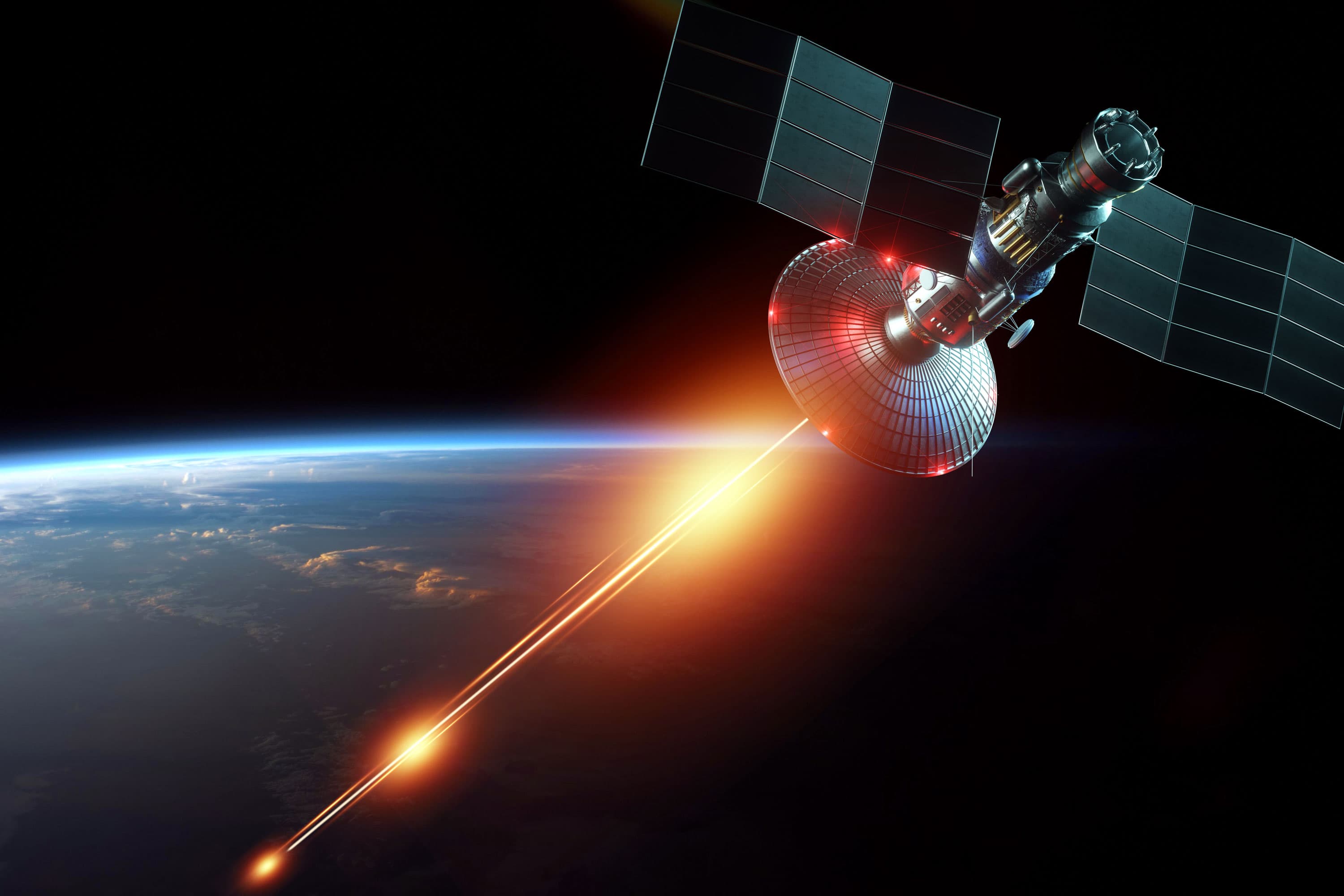

Specifically; although military space activities may sound like a topic of the future, they are very much a topic of today. It is an important subject and one that can be evaluated in great detail. Therefore, I want to convey the main elements of the subject to you in a few parts, like an article series.
As you will recall, the “Treaty on Principles Governing the Activities of States in the Exploration and Use of Outer Space, including the Moon and Other Celestial Bodies” (Outer Space Treaty), which was prepared with inspiration from the 1959 Antarctic Treaty and the 1963 Treaty Banning Nuclear Weapon Tests in the Atmosphere, in Outer Space and Under Water (PTBT), is one of the most fundamental regulations of space law. Regarding military space activities, although demilitarizing space and celestial bodies from military activities was on the agenda, this was not possible due to the opposition of the USA and the USSR. Consequently, the following regulation was made in the Treaty;
Article 4:
States Parties to the Treaty undertake not to place in orbit around the Earth any objects carrying nuclear weapons or any other kinds of weapons of mass destruction, install such weapons on celestial bodies, or station such weapons in outer space in any other manner.
The Moon and other celestial bodies shall be used by all States Parties to the Treaty exclusively for peaceful purposes. The establishment of military bases, installations and fortifications, the testing of any type of weapons and the conduct of military manoeuvres on celestial bodies shall be forbidden. The use of military personnel for scientific research or for any other peaceful purposes shall not be prohibited. The use of any equipment or facility necessary for peaceful exploration of the Moon and other celestial bodies shall also not be prohibited.
As can be clearly understood from the article, not all weapons are banned. Only nuclear weapons and weapons of mass destruction are prohibited.
So, What Are These Weapons?
According to the International Court of Justice’s advisory opinion titled “Legality of the Threat or Use of Nuclear Weapons,” nuclear weapons are explosive devices whose energy is released as a result of the fusion or fission of the atom. They not only release intense heat and energy but can also damage the electronics of satellites by creating electromagnetic pulses in outer space. However, there is one point to be careful about, which is that; not every nuclear reaction can be considered a nuclear weapon. For example, the United Nations Principles Relevant to the Use of Nuclear Power Sources in Outer Space, resolution 47/68 dated December 14, 1992, can be an example of this. Therefore, for instance, a spacecraft using small atomic bombs as a propulsion system is not consequently considered a nuclear weapon.
As for weapons of mass destruction; the first known use of this term was in December 1937. Its modern use, as we know it today, dates back to 1945. In a document signed by US President Harry Truman, it was referred to as “weapons adaptable to mass destruction.” By 1947, the “Commission for Conventional Armaments” was established by the United Nations Security Council.
In 1948, the Commission provided the following definition;
“(Weapons of mass destruction) ….. atomic explosive weapons, radioactive material weapons, lethal chemical and biological weapons, and any weapons developed in the future which have characteristics comparable in destructive effect to those of the atomic bomb or other weapons mentioned above.”
Therefore, as can be understood from the text of the article, anti-satellite weapons, conventional weapons, or military satellites that fall outside of these types of weapons are not covered by the article, and thus it can be interpreted that they are permitted.
Another point that draws attention in the text of the article is that the placing of the banned weapons in orbit or their installation on celestial bodies is prohibited. In contrast, the use of space for the transit of weapons of mass destruction is not banned. Therefore, it is possible to conclude that intercontinental ballistic missiles are also not banned under Article 4 of the Outer Space Treaty. For the same reason, measures taken to neutralize an asteroid will not constitute a violation of the article. The article regulates placement rather than actual use. Another important point is that; while there are partial bans on armament, military satellites are not banned.
In addition to the fourth article of the Treaty concerning military activities and armament, another article we must reference is Article 3 of the Outer Space Treaty; according to this, contracting parties shall act in accordance with international law, including but not limited to the Charter of the United Nations, in the exploration and use of space. According to Article 2, paragraph 4 of the United Nations Charter; “All Members shall refrain in their international relations from the threat or use of force against the territorial integrity or political independence of any state, or in any other manner inconsistent with the Purposes of the United Nations”. Therefore, they are still prohibited from carrying out actions contrary to the United Nations Charter with weapons other than the nuclear weapons and weapons of mass destruction specified in the article.
The term “peaceful purposes,” which is emphasized multiple times in the Outer Space Treaty, is also a controversial term. There are different opinions on whether this term should be interpreted as non-military or non-aggressive. For example; the USA long used “peaceful purpose” in the sense of “non-aggressive.” In contrast, in the Antarctic Treaty, which serves as a reference for the Outer Space Treaty, peaceful purpose was evaluated as non-military purpose. Military activities are regulated in detail not only in the Outer Space Treaty but also in the Moon Agreement. (I have previously explained in detail in my earlier articles that the Moon Agreement has been accepted by only a few countries.) While military activities for scientific purposes are permitted, as in the Outer Space Treaty, establishing military bases, installations, and fortifications, testing any type of weapon, and conducting military maneuvers on the Moon are prohibited. In the Moon Agreement, in addition to placing weapons of mass destruction and nuclear weapons in orbit, placing or using such weapons within or on the surface of the Moon is also banned.
In addition to the points I have presented and explained regarding military activities and armament in space, another important issue is the lack of any regulation stipulating a special registration procedure for such activities or regulating a separate liability for responsibilities arising from such activities.
Although not directly for military activities and armament in space, the article that can be applied to such activities is Article 9 of the Outer Space Treaty. According to this article, states shall conduct their space activities with due regard to the corresponding interests of other states and shall request consultation before activities if they have reason to believe their activities may cause potential harm to other states. Therefore, although not a directly defined action, China’s hitting its own weather satellite with a ballistic missile launched from the ground in 2007 is contrary to space law regulations. Similarly, as you will recall, the USA also hit its spy satellite, which was launched on December 14, 2006, and was at an altitude of 247 kilometers over the Pacific Ocean, with an SM-3 tactical missile fired from a warship in 2008.
What About Ballistic Missiles?
I will cover that in my next article. First and foremost, I wish everyone a healthy and pleasant weekend. I hope this pandemic trouble ends as soon as possible and we return to our normal lives. With love and respect to all my valuable readers.