
Right now, everyone’s eyes and ears are on China’s Long March 5B rocket. The possibility of this 22-ton rocket falling also reminded me of the USSR satellite that fell to Canada in 1978. As I have explained in my previous articles, the launch of Sputnik 1 on October 4, 1957, was a turning point for space law, and shortly after, UNCOPUOS was established, followed by the space law treaties and principles that are still the most fundamental sources of space law today. In these regulations, it was also stated that the launching states (this term was broadly defined to include states from whose territory the launch was made) would be responsible for the damage caused by their space objects. In my article today, I want to discuss the USSR satellite that fell to Canada as an example of what such a process can lead to, despite these regulations.
What Had Happened to the USSR's Satellite?
On September 18, 1977, the USSR satellite, powered by uranium enriched with Uranium-235 isotope and carrying a nuclear reactor, was launched from Kazakhstan into orbit and was registered at the U.N. as UN Doc. A/AC.105/INF.368 on November 22, 1977. Shortly after the satellite’s launch, irregularities were observed in its movements. The North American Aerospace Defense Command (NORAD), which monitors all satellites and debris, also detected these irregularities, whereupon the American National Security Council instructed the American Department of Energy to carry out the necessary work for an emergency response. The USA also warned the OECD and NATO about the possible impact.
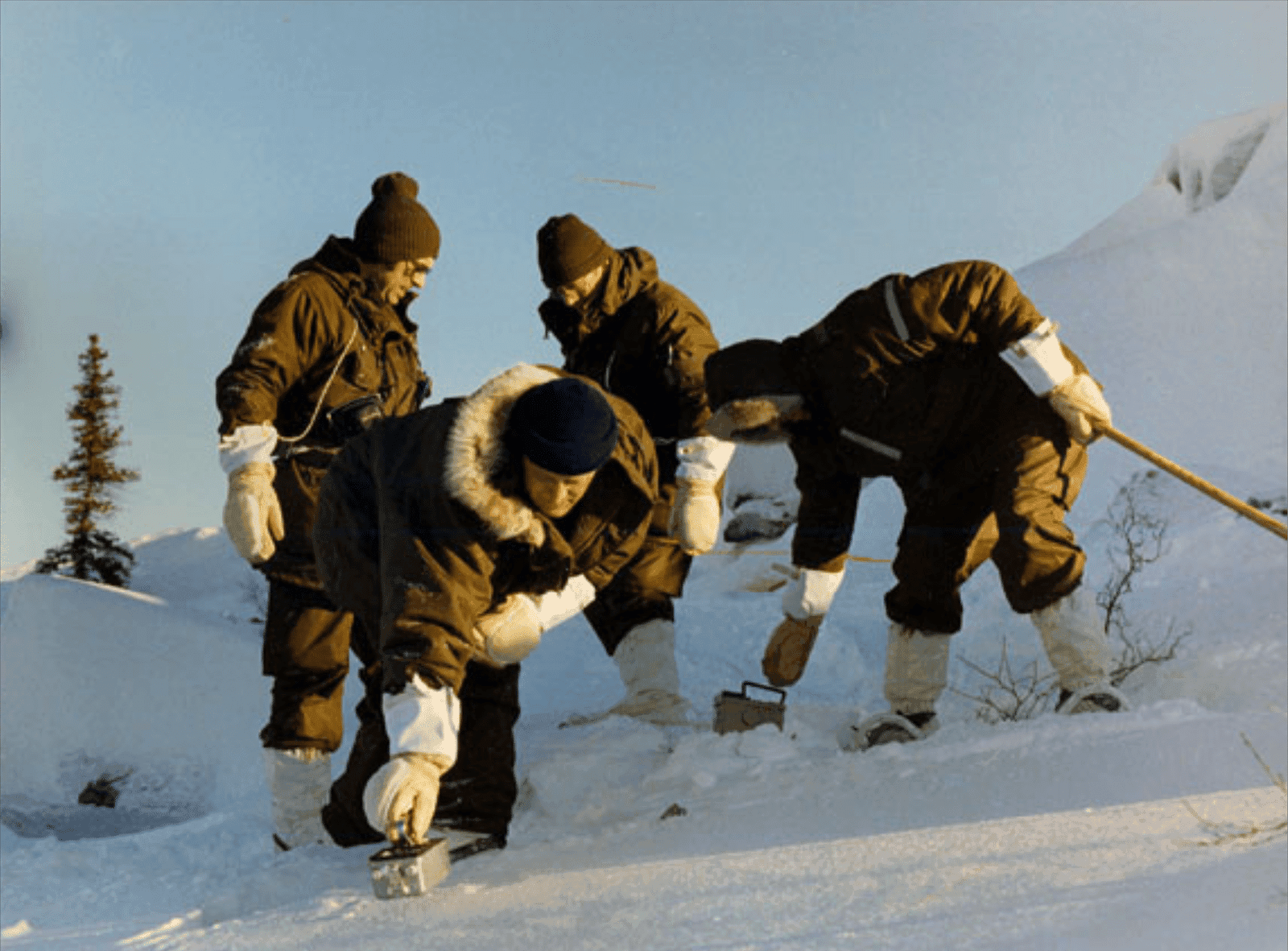
Immediately after the satellite entered Canadian airspace, the then-American President Jimmy Carter called the then-Canadian Prime Minister Pierre Trudeau to offer help, whereupon American officials arrived in Canada on January 24, 1978, the day the satellite fell, to carry out the clean-up operations under the name “Operation Morning Light”.
With the fall of the satellite, it was also seen how different perspectives countries could have in such an incident. The parties had different assessments regarding the occurrence of the event and the clean-up process.
As Follows;
Regarding the Obligation to Warn About a Possible Accident: Canada’s view was that all states likely to be harmed in the event of such an impact should be warned. The USSR, however, claimed an obligation to warn only the USA. Because, as a result of their assessment regarding Cosmos 954, the USSR claimed they predicted the satellite would fall into the open sea in the Aleutian Islands region, and therefore only the USA needed to be informed. This notification was made.
Regarding the Cause of the Accident : The USSR claimed that the cause of the Cosmos 954 accident was a collision. The USSR also claimed that Cosmos 954 completely disintegrated during re-entry and that its debris posed a minimal radiation hazard. In contrast, Canada claimed that the accident was caused by the engine. According to Canada’s claim, although the satellite should have been moved to a much higher orbit in case of an emergency, this was not possible because the rocket systems were problematic. Regarding radioactivity, Canada claimed that all fragments, except for two pieces, were radioactive, and that the radioactivity level in some of them was even lethal.
Regarding the Obligation to Share Information About the Satellite: Canada both requested information about the satellite core and argued that this information should be public; in response, the USSR stated that sufficient information had been provided and refrained from giving more information.
As a result, Canada demanded 6 million Canadian Dollars on January 23, 1979, for the clean-up operation, which cost approximately 14 million Canadian Dollars, and the USSR paid 3 million Canadian Dollars on April 2, 1981. It is claimed that approximately 2.5-3 million Canadian Dollars of the clean-up operation costs were covered by the USA. The repayment of this amount was not offered, nor was this figure demanded from the USSR.
As you can see, with this accident, not only did a country’s satellite cause serious harm to another country for the first time, but the international agreements on space law, which were in force at that time and to which the said states were parties, were also put to the test, in a sense.
I am also following the process regarding China’s rocket with concern. I hope this event is overcome without any damage occurring.
With respect, love, and greetings to everyone,