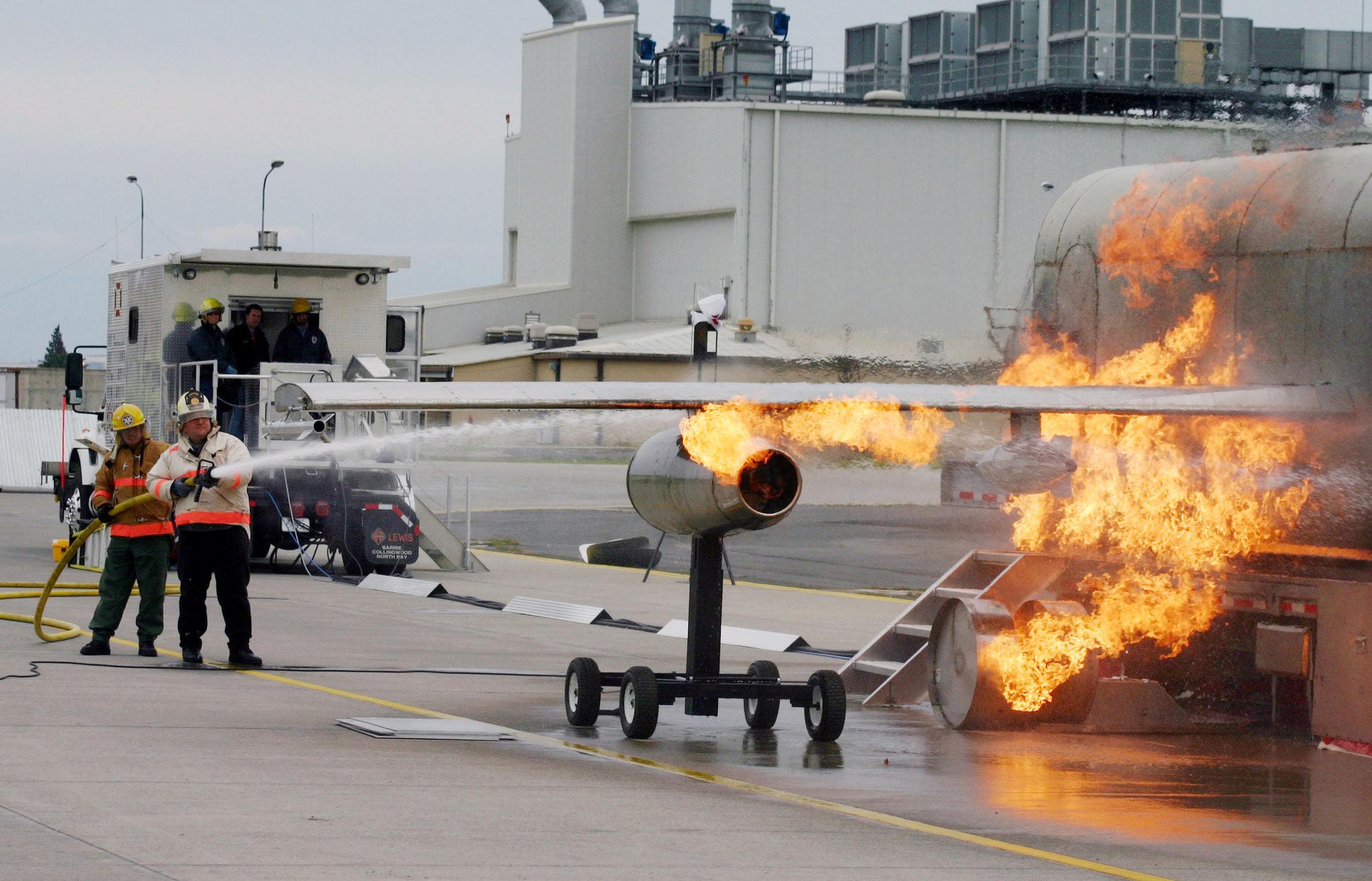

The numerous forest fires that occurred in our country this year deeply shook all of us. Unfortunately, news of fires continues to arrive. I hope we no longer face such disasters. The recent events once again highlighted the difficulties encountered in fire fighting and the precautions that need to be taken.
One of the most important elements of the equipment used to control fires is, of course, fire extinguishing chemicals. In today’s article, starting from the fires, I want to share some important developments regarding the fire extinguishing foams used in the aviation sector.
As you may recall, in recent weeks, a chemical foam release occurred at a maintenance hangar in Detroit due to the accidental activation of the automatic fire suppression system, necessitating cleaning and maintenance on the surfaces of Spirit Airlines’ aircraft. So, are there any aviation-specific regulations regarding the chemicals used in fire extinguishing?
The International Civil Aviation Organization (ICAO), in Annex 14 of the Chicago Convention, mandates the provision of fire-fighting equipment at aerodromes. The Aerodrome Services Manual (Doc 9137 – AN/898 Part 1 – Rescue and Fire Fighting), which guides this regulation, has been adapted to current requirements through various updates over the years.
The concept of “critical area” defined in this manual refers to the areas where survivors of an accident cannot escape without assistance, and controlling the fire in these areas ensures the safe conduct of rescue operations. Chapter 8 of the manual defines the chemicals used in fire extinguishing. These are protein foam, AFFF (Aqueous Film Forming Foam), fluoroprotein foam, film-forming fluoroprotein foam, and synthetic foam.
PFAS (polyfluoroalkyl substances), commonly used particularly in AFFF type foams, are entirely man-made compounds obtained by replacing hydrogen atoms in the carbon chain with fluorine atoms. This structure gives PFAS resistance to heat, water, and oil. Due to these properties, they are highly effective in fire extinguishing. However, despite their effectiveness, they unfortunately also carry serious environmental and health risks.
Substances in the PFAS family such as PFOA (perfluorooctanoic acid) and PFOS (perfluorooctane sulfonic acid) can cause cancer, liver damage, immune system disorders, and developmental problems. Furthermore, these chemicals can persist in nature for a long time without breaking down and tend to accumulate in living tissues. For these reasons, the use of foams containing PFAS is being globally banned or severely restricted.
Turning to how the aviation sector is responding to this transformation; fire fighting must certainly be planned not only with effective intervention but also with a strategy that considers environmental sustainability and human health. ICAO and other international authorities are taking steps to promote the use of fluorine-free foams, taking into account the risks posed by PFAS chemicals.
This transition process covers not only large airports but also maintenance hangars, training facilities, and practice areas. The effectiveness of fluorine-free foams is also an important topic of debate. Therefore, many airports are evaluating the performance of these new-generation foams and shaping their transition plans. It is of great importance that our country also effectively manages its compliance process with this global transformation in terms of environmental health, human health, and harmonization with international standards.
Globally Significant Developments
There are many efforts to restrict the use of PFAS chemicals due to their risks. To give examples from some countries:
USA: The obligation to use fluorine-containing chemicals was removed with the FAA Reauthorization Act of 2018. A new law enacted in 2024 provides for the complete prohibition of PFAS-containing foams, and also sets out transition plans for airports regarding the disposal processes of these substances.
United Kingdom: The United Kingdom is also working to prohibit the use of PFOA and other PFAS-containing foams in compliance with REACH and Persistent Organic Pollutants (POPs) legislation.
European Union: PFOA was banned under the REACH regulation in 2020, and PFOS was phased out with the Stockholm Convention in 2009. The European Commission, with regulation no. 2025/1399 published on July 14, 2025, extended the transition period for ending the use of PFOA in fire-fighting foams until December 2, 2025.
Turkey: Works are being carried out to harmonize with European legislation. For example, the Regulation on the Registration, Evaluation, Authorization and Restriction of Chemicals (KKDIK) entered into force in December 2017. This regulation was prepared in parallel with the REACH regulation in Europe, and studies on PFAS-containing substances are also continuing.
In conclusion, the issue of fire fighting in aviation is not only a technical necessity but also an area that requires environmental responsibility, sensitivity to human health, and international cooperation. The popularization of new-generation fluorine-free foams emerges as a requirement of these responsibilities. I hope that our country, too, will play an effective role in protecting both our nature and our people by managing this transformation process in the light of scientific data and in a timely manner.
With my respect, love, and greetings to all my valued readers.