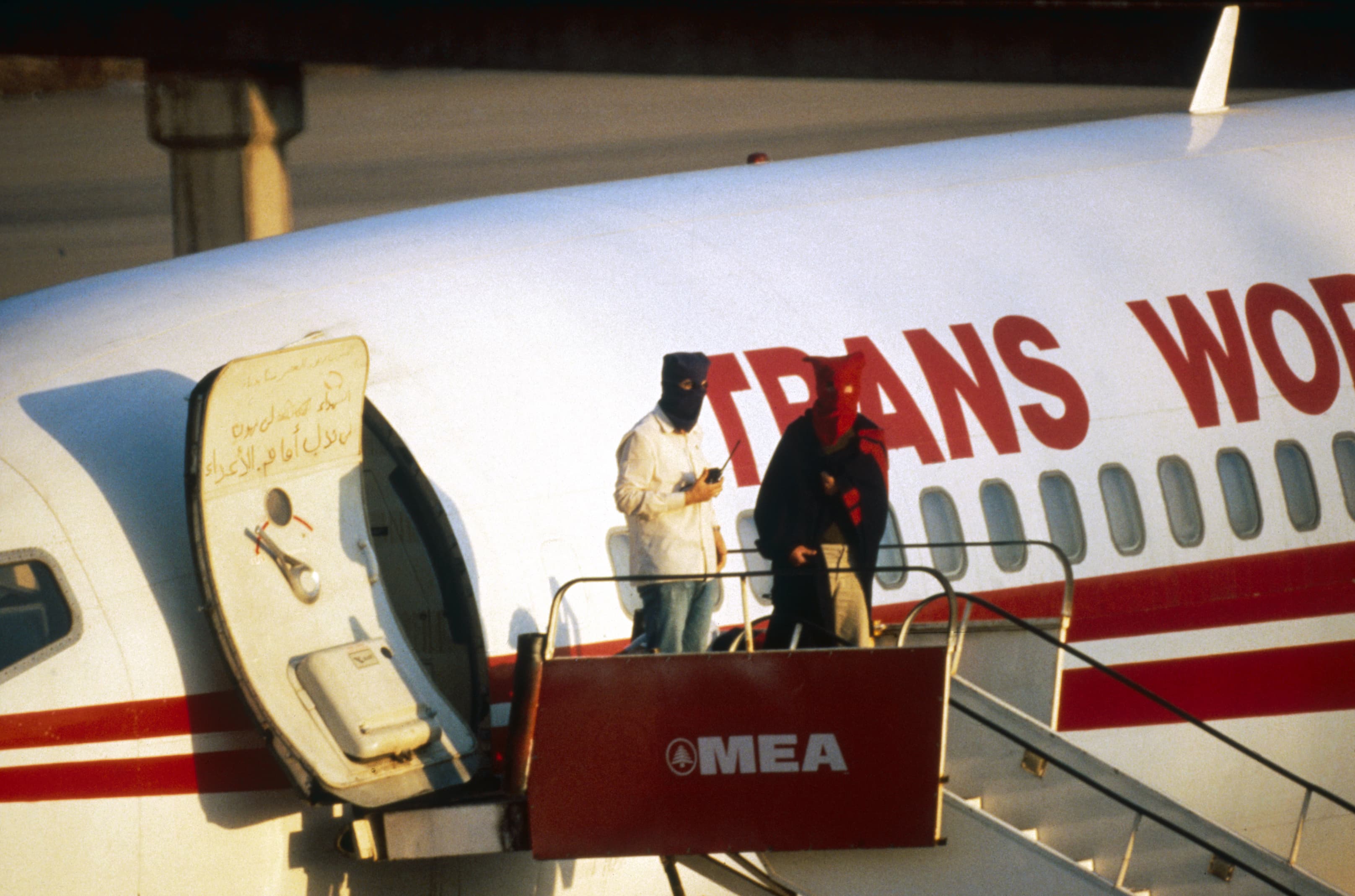

The first hijacking of a commercial aircraft occurred in 1948, resulting in a Cathay Pacific aircraft crashing into the ocean near Macao. It is evident that due to numerous tragic incidents, there was a clear need for legal regulation on the subject. So, where are the regulations concerning aircraft hijacking found? Who is considered an air pirate? How are they sanctioned?
When examining the legal infrastructure of the subject, it is first necessary to mention the regulations in the Geneva Convention on the High Seas dated April 29, 1958. Although the convention primarily concerns the high seas, it also contains provisions related to air piracy.
According to the Convention; a) Any illegal acts of violence, detention or any act of depredation, committed for private ends by the crew or the passengers of a private ship or a private aircraft, and directed: (i) On the high seas, against another ship or aircraft, or against persons or property on board such ship or aircraft; (ii) Against a ship, aircraft, persons or property in a place outside the jurisdiction of any State; b) Any act of voluntary participation in the operation of a ship or of an aircraft with knowledge of facts making it a pirate ship or aircraft; c) Any act of inciting or of intentionally facilitating an act described in sub-paragraph (a) or (b) of this article is considered piracy.
So, what authority does the Geneva Convention grant to the contracting states? The Convention regulates the authority of contracting states to seize an aircraft taken by piracy on the high seas or in any other place outside the jurisdiction of any State, as well as the arrest of the persons and the seizure of the property on board. However, this authority cannot be used arbitrarily, as liability for arbitrary seizure and the ships and aircraft authorized to seize are also matters explicitly regulated in the Convention.
However, upon examination of the articles, it can be seen that these regulations do not cover all forms of air piracy; for example, acts not committed for private ends are not within the scope according to the text of the article. It is for this reason that in the following years, conventions were specifically drawn up for the crime of aircraft hijacking.
ICAO's Efforts:
In 1963, ICAO established a general framework for the states where a hijacked aircraft lands to take necessary actions to enable the aircraft commander to regain control of the aircraft and for the passengers and crew to continue their journey as soon as possible.
These regulations in the 1963 Tokyo Convention can be considered the first step in international cooperation. For the widespread acceptance and applicability of the Convention, the ICAO General Assembly, at its meeting in Buenos Aires in September 1968, adopted Resolution A16-37, calling on states to ratify the Tokyo Convention.
In December 1968, work began on regulations regarding the prosecution of air pirates. Due to the increase in incidents of aircraft sabotage and damage, the ICAO General Assembly held an extraordinary session to address the need to regulate aircraft sabotage in addition to piracy. However, since it was confirmed that the Diplomatic Conference would convene in The Hague in December 1970 to evaluate the unlawful seizure of aircraft, and momentum had been gained for drafting a convention, it was deemed appropriate to create a separate convention for aircraft sabotage to avoid extending the process by adding new agenda items. At the meeting held from June 16-30, 1970, Resolution A17-20 requested the Council to convene the Legal Committee to prepare a Convention before the end of the summer of 1971 in the northern hemisphere. For this reason, the Montreal Convention, which regulates aircraft sabotage, was separately arranged in 1971.
Returning to our topic; as I have indicated, a large number of aircraft hijackings occurred, especially in the late 60s and early 70s. The fact that there were 336 successful hijackings in 1968 and 70 in 1970 highlighted the necessity for regulations. The United Nations Security Council, in its Resolution 2551 (XXIV) of December 12, 1969, concerning the Forcible Diversion of Civil Aircraft in Flight, called upon states to take all necessary measures, to punish air pirates, and to support ICAO.
However, September 1970, in particular, was a turning point. Specifically; on September 6, 1970, three international airline aircraft—a Swissair DC-8, a TWA Boeing 707, and a PANAM Boeing 747—were simultaneously hijacked by the Popular Front for the Liberation of Palestine. Two of them were landed at Dawson's Field, northeast of Amman, and one in Cairo. On September 9, a BOAC aircraft was also hijacked. The PANAM aircraft exploded shortly after passenger evacuation, as one of the hijackers pulled the pin of a hand grenade just before landing in Cairo. On the same day, an attempt was made to hijack a Boeing 707, but it failed because an Israeli guard on board, Patrick Arguello, shot and killed the hijacker. Following this, on September 9, 1970, the United Nations Security Council adopted Resolution 286, calling for the release of all passengers and crew and for states to take measures to prevent future aircraft hijackings.
As a continuation of the same act, three days later, as I mentioned above, another BOAC aircraft was hijacked, and on September 11, after most people were released while some hostages were kept for negotiation purposes, the three aircraft at Dawson's Field were blown up on September 12.
With its Resolution 2645 (XXV) of November 25, 1970, the United Nations General Assembly also condemned aircraft piracy and called upon states to take all necessary measures to sanction these individuals. The same resolution also invited states to ratify the Tokyo Convention and called upon them to exert every effort to achieve successful results at the meeting to be held in The Hague in December.
On December 16, 1970, the Convention for the Suppression of Unlawful Seizure of Aircraft was signed in The Hague. The law finding it appropriate for our country to ratify this convention was published in the Official Gazette No. 14384, dated 07.12.1972.
Some of the regulations in the Convention are as follows:
Each Contracting State undertakes to make the offence punishable by severe penalties.
Upon being satisfied that the circumstances so warrant, any Contracting State in the territory of which the offender or alleged offender is present shall take him into custody or take other measures to ensure his presence.
The offence shall be deemed to be included as an extraditable offence in any extradition treaty existing between Contracting States.
Contracting States shall, in accordance with their national laws, furnish the ICAO as promptly as possible with any relevant information concerning the circumstances of the offence, the measures taken to enable the aircraft commander to regain control, the measures taken regarding the offender or alleged offender, and particularly the results of any extradition proceedings.
The importance of the absolute sanctioning of the crime of aircraft hijacking has also been expressed in international meetings.
At the Economic Summit Meeting held in Bonn in 1978, the 7 participating countries agreed to boycott countries in the field of air transport that refuse to extradite air pirates, prosecute them, or return hijacked aircraft, effective immediately. According to the Bonn Declaration, flights to such countries will not be operated, and their aircraft will not be allowed to land in the territories of the 7 countries participating in the summit. At the Economic Summit held in Tokyo on June 29, 1979, satisfaction was expressed for the broad support given to the Bonn Declaration.
Another important regulation concerning the sanctioning of the crime of aircraft hijacking is the European Convention on the Suppression of Terrorism (1978). This convention, which entered into force for Turkey on 20.08.1981, following its publication in the Official Gazette No. 17291 on 26.03.1981 and the deposit of the instruments of ratification with the Council of Europe, excludes the offences regulated in The Hague and Montreal Conventions from the scope of political offences. In this way, it was aimed to prevent a potential loophole by eliminating or limiting the possibility for the requested state to object to the extradition request based on the political nature of the crime.
To be continued in the next article....