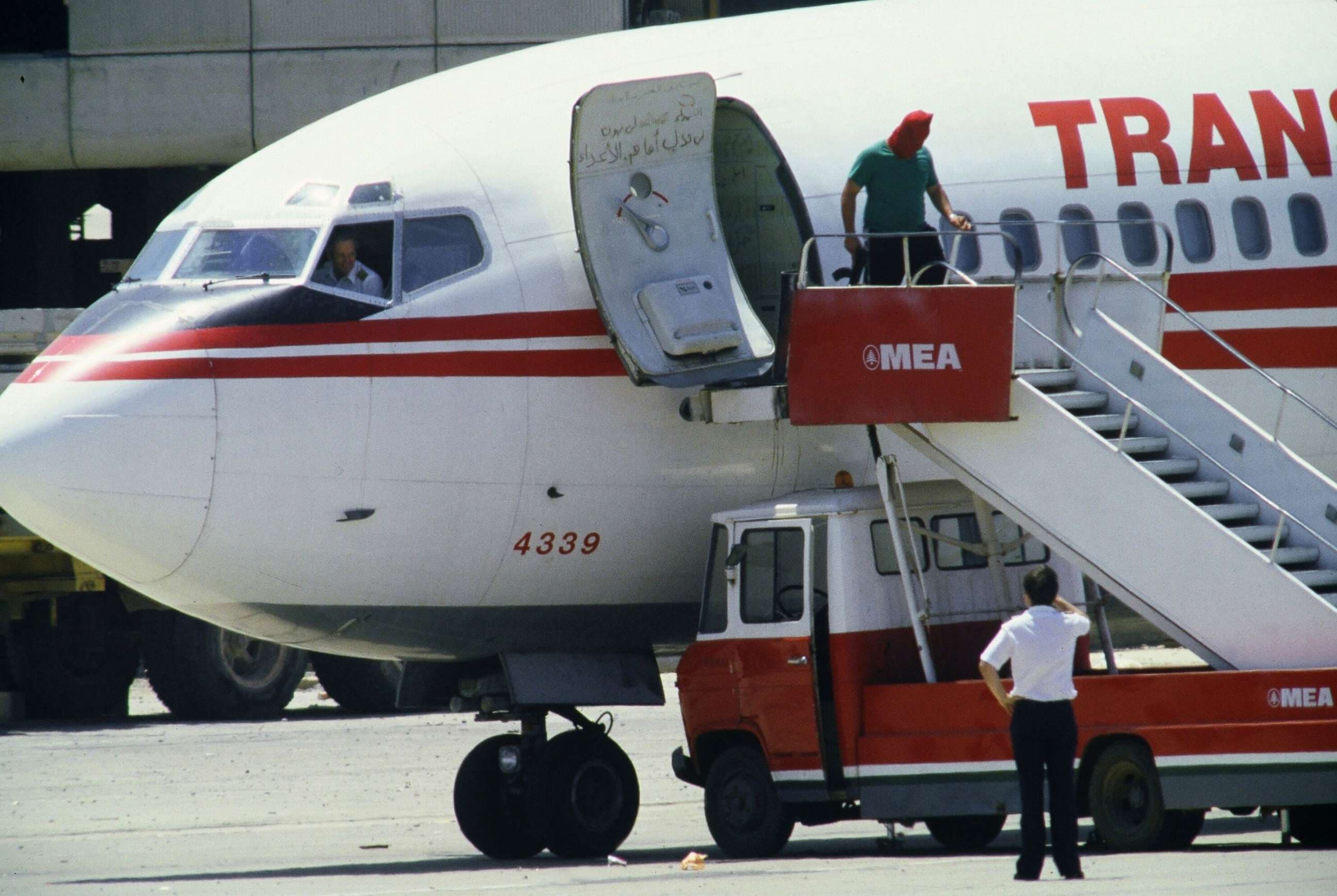

As I stated in my article, Contracting States undertook to punish this crime with severe penalties under the Hague Convention of December 16, 1970. Turkey, as a party to this convention, has fulfilled this commitment and regulated the crime of aircraft hijacking in our domestic law.
Article 384 of the Repealed Turkish Penal Code (No. 765) regulated "Crimes Against Vehicles of Transport and Communication," stipulating that the perpetrator would be punished with imprisonment in the event of the hijacking of land, sea, and air vehicles. The Turkish Penal Code (No. 5237) was similarly arranged; in Article 223 of the sixth section titled "Crimes Against Transportation Vehicles or Fixed Platforms," the "Hijacking or seizure of transportation vehicles" was regulated, and again, sanctions related to the hijacking of different transportation vehicles were organized. The penalty for the crime of aircraft hijacking is imprisonment from five to ten years, and this penalty will be further increased if deprivation of liberty, injury, or other crimes are committed during the commission of the crime.
Following the 1970 Hague Convention, the "Convention for the Suppression of Unlawful Acts Against the Safety of Civil Aviation" (Montreal Convention), signed in Montreal on September 23, 1971, and entered into force on January 23, 1973, was ratified by our state with Law No. 1888 dated April 17, 1975.
Under this Convention, acts such as the destruction of an aircraft, committing an act of violence against a person on board an aircraft likely to endanger its safety, causing damage likely to endanger its safety in flight, etc., and the attempt to commit such acts are stipulated to constitute a crime. These offenses shall be deemed to be included as extraditable offenses in any extradition treaty existing between Contracting States.
Furthermore, it is regulated in this Convention that the Contracting State in the territory of which the alleged offender is found shall, if it does not extradite him, be obliged, without exception whatsoever and whether or not the offence was committed in its territory, to submit the case to its competent authorities for the purpose of prosecution.
Similar to the Hague Convention, the Montreal Convention also stipulates that Contracting States shall endeavor to take all practicable measures for the purpose of preventing the specified offences, in accordance with international and national law. With the Montreal Protocol adopted in 1988, the scope of the Montreal Convention was expanded to include potential attacks at airports.
Following the attacks in the U.S.A. on September 11, 2001, which resulted in the deaths of 2996 people, the ICAO General Assembly, with its Resolution A33-1, requested the ICAO Council and Secretary General to review the conventions related to aviation security, Annex 17, and other relevant annexes, taking into account new threats to civil aviation.
As a result of the evaluation and studies, the Convention on the Suppression of Unlawful Acts Relating to International Civil Aviation (Beijing Convention) to replace the Montreal Convention (1971) and the Montreal Protocol (1988), and the Protocol Supplementary to the Convention for the Suppression of Unlawful Seizure of Aircraft (Beijing Protocol) amending the 1970 Hague Convention were prepared and signed at the Diplomatic Conference on Aviation Security on September 10, 2010. The Convention and Protocol, with their comprehensive regulations against terrorist acts, will also contribute to the Global Counter-Terrorism Strategy adopted by the United Nations General Assembly on September 8, 2006.
Many new offenses have been defined in the Beijing Convention. For example, it is regulated that using an aircraft in service for the purpose of causing death, serious bodily injury, or serious damage to property or the environment constitutes an offense. It is clear that the aim of this regulation is to ensure the sanctioning of the use of the aircraft itself as a weapon, as in the 9/11 attacks.
Additionally, it was also regulated for the first time that the use of any biological, chemical, nuclear (BCN) weapon or explosive, radioactive, or similar substances against or on board an aircraft in service in a manner that causes or is likely to cause death, serious bodily injury, or serious damage to property or the environment constitutes an offense. The Convention also criminalized the transport, causing to be transported, or facilitating the transport of many weapons and substances, including but not limited to BCN weapons.
Endangering the safety at an airport, and the destruction of the airport and/or aircraft at the airport are also among the offenses regulated in the Convention. Contracting States undertake to sanction the perpetrators of these crimes with severe criminal penalties. The Convention also contains regulations on matters such as jurisdiction and extradition.
Turkey also found the ratification of this Convention appropriate with Law No. 6899 dated 02.03.2017, by declaring that being a party to this Convention shall in no way be interpreted as implying any obligation to establish relations with countries Turkey does not recognize within the framework of this Convention, and with a reservation that it does not accept the first paragraph of Article 20 concerning the submission to arbitration of any dispute concerning the interpretation or application of the Convention that cannot be settled by negotiation, and the referral of the dispute to the International Court of Justice by any of the parties if they are unable to agree on the organization of the arbitration within six months from the date of the request for arbitration. Following Turkey's ratification, the Beijing Convention entered into force on July 1, 2018.
In the Beijing Protocol, the definition of the crime was made more comprehensive than in the Hague Protocol, and new offenses were regulated. According to this protocol; any person commits an offence if that person unlawfully and intentionally seizes an aircraft in service by force or threat of force, or by coercion, or by any other form of intimidation, or by technological means.
Furthermore, threatening to commit such offenses or unlawfully and intentionally causing any person to receive such a threat also constitutes an offense. Attempting to commit these offenses, instigating these offenses, participating as an accomplice, or organizing or directing others to commit these offenses are also regulated as crimes in the protocol.
Knowingly providing unlawful and intentional assistance to a person who has committed such offenses to evade investigation, prosecution, or punishment, knowing that the person is wanted for such an offense, or is being sought by law enforcement authorities for criminal prosecution, or has been convicted of such an offense, is also regulated as a crime in the protocol.
In addition to the regulations regarding offenses, the protocol also introduced some new regulations regarding jurisdiction. This Protocol was also ratified by our state with Law No. 6900 dated 02.03.2017, with the declaration that being a party to the Protocol should not be interpreted as implying any obligation for Turkey to establish relations with countries it does not recognize within the framework of this Protocol. The Beijing Protocol also entered into force on January 1, 2018, following its ratification by Uganda.