
As you may recall, many countries provided some direct support to aid the aviation sector's recovery. In addition to direct state aid, efforts were made to overcome the crisis by making improvements in some cost items.
According to the slot rules in the EU Regulation 95/93, as amended by Regulation /2004, and similarly in our own DGCA Slot Implementation Directive; "If an air carrier does not use a slot series allocated to it at a rate of at least 80%, it will not be entitled to that slot series in the same scheduling period of the following year."
Therefore, if this rule is not followed, the slots are returned to the slot pool. The exceptions to this rule are also regulated in the relevant legislation, and this rule will not be applied if the carrier cannot perform its operations as planned due to interruptions in aviation services, if operations at airports are interrupted, or based on other specified reasons.
If you recall the early days of the pandemic, many people canceled their flights out of fear even before aviation activities had stopped, and there was a rapid decline in passenger numbers. Despite this, many companies continued their flights to avoid losing their slots.
Virgin Galactic, one of these companies, announced that it had to conduct "ghost flights" to protect its slots, incurring financial losses as a result. TIACA, IATA, and many other aviation-related organizations called for the relaxation of slot rules to prevent further damage to airlines due to the pandemic.
In past years, Europe had relaxed these rules during the September 11 attacks, the SARS epidemic, the 2003 Iraq War, and the 2009 financial crisis. These demands from the sector yielded positive results, and with the regulation published in the Official Journal of the European Union on March 31, 2020, and entering into force on April 1, 2020, these rules regarding slot allocation were retroactively suspended.
Accordingly, this suspension, which will be valid between March 1, 2020, and October 24, 2020, will go back to an even earlier date for flights between the European Union and China or Hong Kong, with a regulation also covering the period from January 23 to February 29.
Another support for the sector came from Eurocontrol. According to the support package agreed upon by Eurocontrol's 41 members, airlines that flew in European airspace will be able to defer their air traffic control fees from February to May until the end of 2020 or the beginning of 2021, which amounts to a sum of €1.2 billion for the airlines.
Unfortunately, we do not know when the pandemic will end. As in every sector, movements have begun in the aviation sector to return to normal life, but returning to the old ways is not something that can happen overnight. One notable prediction was voiced by IATA Director General Alexandre de Juniac. According to de Juniac, a return to pre-crisis levels will only be possible around 2023. I hope this process will be even shorter.
So, is the aviation sector ready for the normalization process during the pandemic, which we call the "new normal" and have been experiencing for a while?
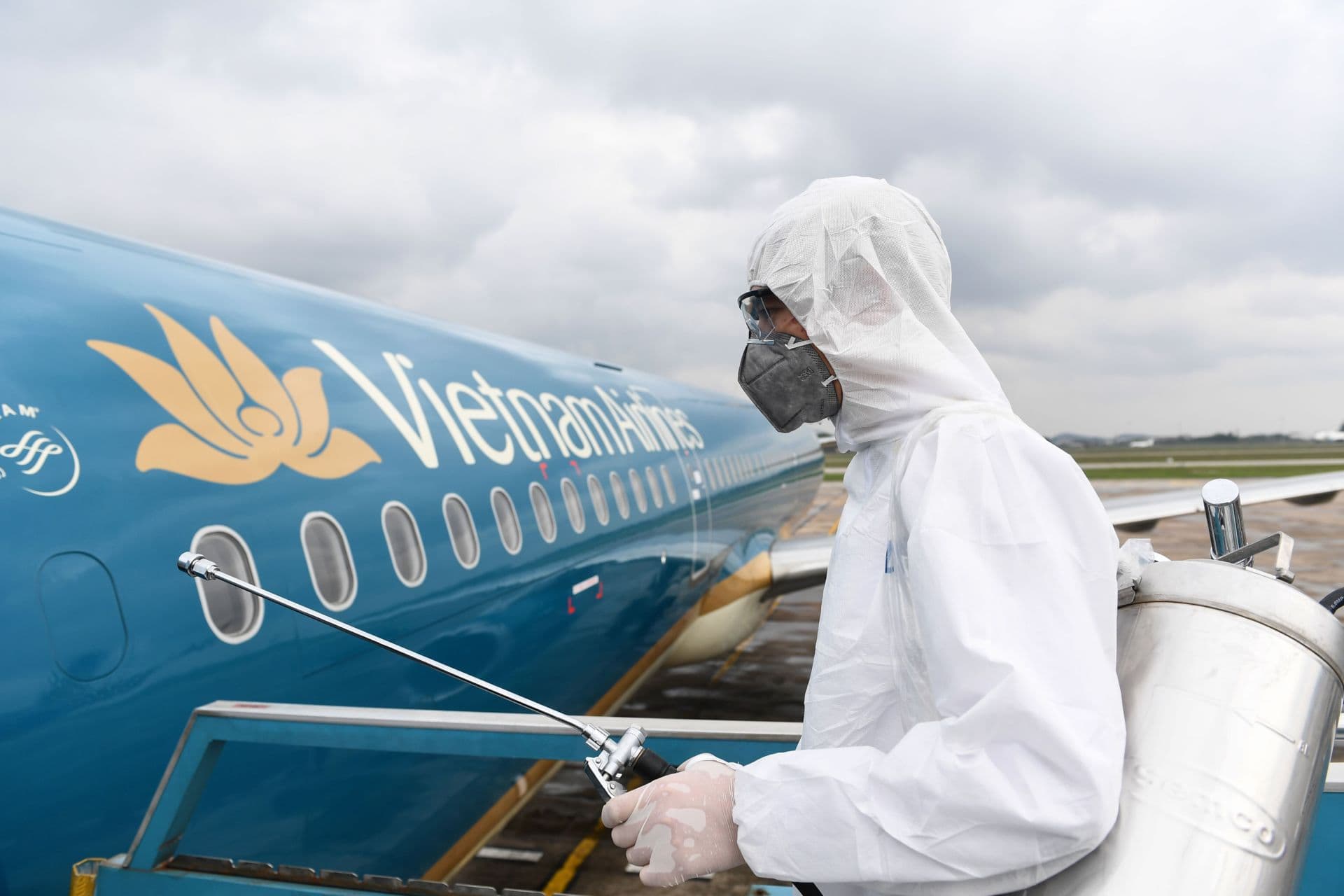
A list of "Areas Where Enhanced Aircraft Disinfection is Required to Prevent the Spread of Covid-19 Infection" was created in an airport assessment conducted by EASA with the European Centre for Disease Prevention and Control, the World Health Organization, and some health institutions, published on June 3, 2020, and effective June 5, 2020. While the list identifies specific regions and cities in many countries like France, Italy, Russia, and the U.S. as risky, for some countries, the names of the airports (e.g., high-traffic airports like Heathrow, Schiphol are also on this list) are listed without specifying a location.
For Turkey, Belgium, the United Arab Emirates, and many other countries, it was stated that this application should be carried out at all airports, without specifying a region or airport name. Therefore, the measures at the airports, our first point of departure, are very important.
Another frequently discussed topic is how safe aircraft are. I would like to answer this question by referring to an IATA report. In IATA's study "Restarting Aviation After Covid-19," the evaluations from the May 25th meeting with the IATA Medical Advisory Group were discussed.
The study also included information about two flights with Covid-19 positive passengers. Accordingly; on a flight from the U.S. to China on March 31, 12 passengers were found to be symptomatic, but all 328 passengers and crew tested negative.
On another flight, however, the result was unfortunately not very encouraging. Specifically; in the investigation after a flight from the UK to Vietnam on March 2, 2020, it was claimed that one passenger infected 14 other passengers and one cabin crew member. The IATA report stated that they did not yet have detailed information about the flight in question and that an investigation would be conducted.
On April 29, the ICAO Council established the "Covid-19 Aviation Recovery Task Force (CART)" to assess the risk factors of airports, aircraft, and other places of social interaction and to take necessary measures.
In addition to council members, participants from the industry also took part in this group, and a "Take-off Guidance" was created for the resumption of aviation activities. This guide, adopted by the ICAO Council on June 1, 2020, includes separate measures for airports, aircraft, crew, and cargo. We will see together whether the measures taken are sufficient.
I hope we return to healthy days again very soon,
Best regards,