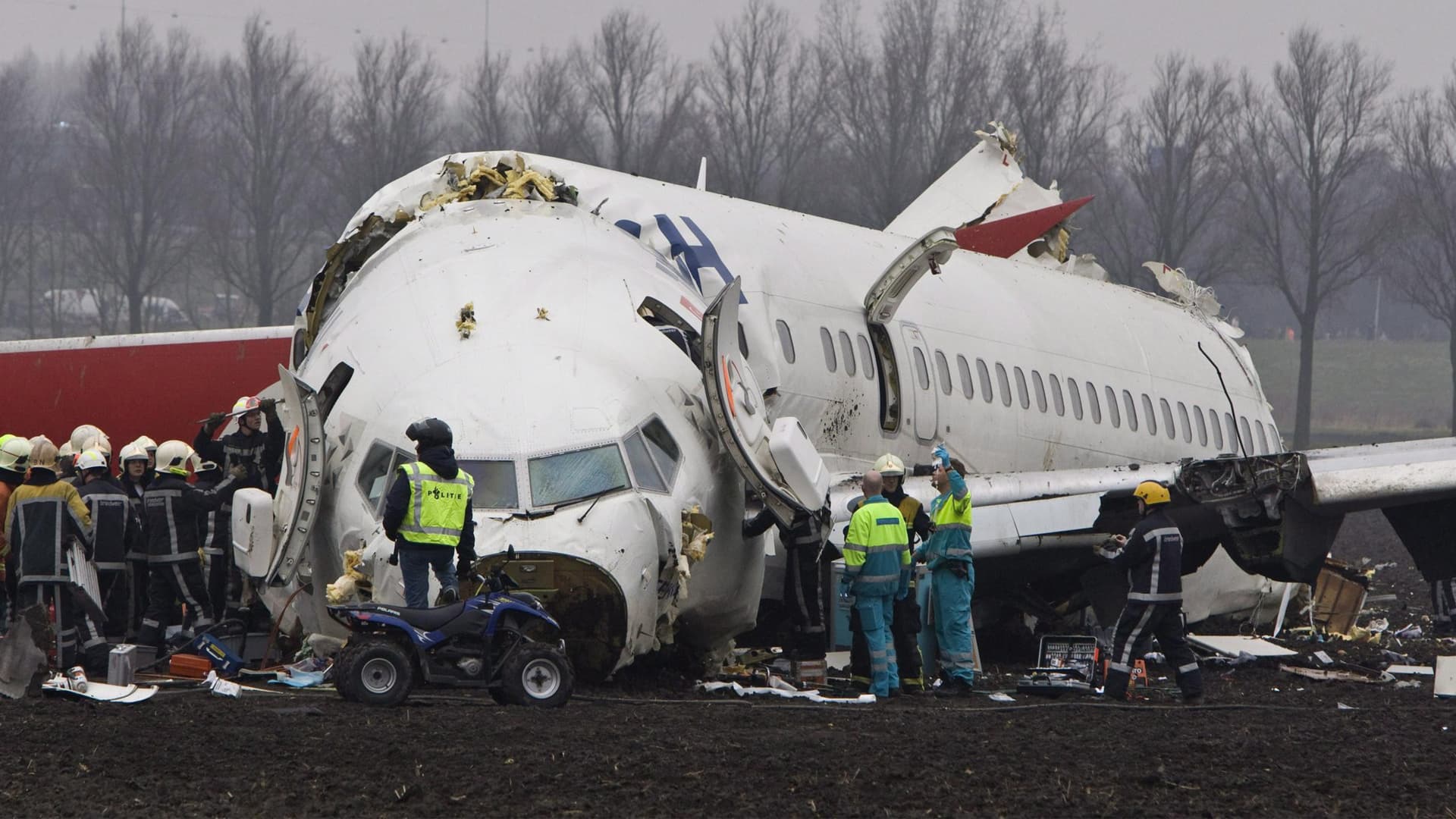

The Convention on International Civil Aviation, also known as the Chicago Convention, was signed by 52 states on December 7, 1944. The International Civil Aviation Organization (ICAO) was established on April 4, 1947. ICAO is composed of an assembly, a council, and such other bodies as may be necessary, as regulated in Article 43 of the Chicago Convention. In accordance with Article 54 of the Chicago Convention, ICAO adopts and amends international standards and recommended practices (SARPs) concerning airports, air traffic control practices, the operation and licensing of technical personnel, log books, and other matters to ensure the safe, regular, and efficient conduct of air navigation.
Regarding the investigation of aircraft accidents; Annex 13 to the Chicago Convention was established on April 11, 1951, based on Article 37 of the Chicago Convention. This annex regulates many aspects of accident and incident investigation, including but not limited to; matters related to the gathering and preservation of evidence; the notification obligations of the state where the accident occurred (to ICAO, the state of registry, etc.); the rights and obligations of the state of registry, the state of the operator, the state of design, and the state of manufacture; and the issuance of the final accident report. When regulating accidents and incidents, the definitions of accidents and incidents were made to include unmanned aircraft as well.
In Annex 13, regarding the objective of accident and incident investigation, it is explicitly stated, “The sole objective of the investigation of an accident or incident shall be the prevention of accidents and incidents.” It clarifies that the purpose of the investigation is to prevent potential future accidents and incidents. It is also clearly stated that the purpose of the investigation is not to apportion blame or liability.
Similarly, Article 12 of the Turkish Civil Aviation Act (No. 2920), concerning the research and investigation of accident causes, stipulates that technical research and investigation shall be conducted “for the purpose of clarifying the causes and manner of occurrence of the accident and preventing its recurrence to ensure the safety of life and property in civil aviation.” It further regulates that a board, to be selected from persons recognized for their expertise in the field of aviation and established by the Ministry of Transport, Maritime Affairs and Communications, will conduct research and investigation for this purpose; and will assist in the collection of evidence in cooperation with the public prosecutor in charge of the investigation. It is also regulated that the board may apply to the public prosecutor to ensure the taking of statements from persons who refrain from providing information during this activity.
As I also agree, some authors in the doctrine express the opinion that if there is fear of judicial or criminal investigation, it is not possible to cooperate in revealing the real cause and to tell the truth. Since the purpose of the investigation report is not to find fault, it is necessary to obtain reports from independent and impartial experts selected by the court for the determination of fault. In accordance with the decision of the General Assembly of the Turkish Court of Cassation dated 13.11.2002, the civil aircraft accident report is not accepted as an official report for determining fault and the at-fault party, and the court obtains reports from impartial experts who are specialists in their fields.
In the European Union, a similar evaluation was made regarding the use of final accident reports in courts. In the European Commission’s working report dated 27.04.2016, which evaluated the application of Regulation (EU) No 996/2010 on the investigation and prevention of accidents and incidents in civil aviation, it was stated that the purpose of accident reports is the prevention of future accidents and not to apportion blame or liability, but that courts nevertheless use accident reports, and this is possible. That is; there is no regulation in the commission report that explicitly prohibits the use of the final report in national courts, and the report can be used in courts by imposing some restrictions and not presenting certain data.
As I stated at the beginning of my article, the main purpose of preparing accident reports, as clearly stated in Annex 13, is to prevent potential future accidents. Another regulation made for this purpose is regulated in Article 6.8 of the annex. According to Annex 13, Article 6.8, at any stage of the investigation, the investigating authority shall recommend to the appropriate authorities, including those in other states, any preventive action that it considers necessary to be taken to enhance aviation safety.
In our country, SHY 13 similarly regulates that the state conducting the investigation may, at any stage of the investigation, notify other states and relevant authorities of matters it deems necessary for the prevention of similar incidents.
Such recommendations may not always be directly related to the cause of the accident. For example, following the crash of the DC-10 in Sioux City, Iowa, in 1989, the American National Transportation Safety Board (NTSB) made recommendations on four separate issues before issuing its final report. Following the crash of the ATR 72 in Roselawn in 1994, the NTSB issued urgent safety recommendations within a week after the accident.
In the TWA 800 investigation, following the determination that the cause of the accident was the explosion of the center wing fuel tank, the NTSB issued urgent safety recommendations aimed at eliminating explosive fuel/air vapors in airliner fuel tanks. To emphasize the importance of safety recommendations, the US Congress required the Department of Transportation (DOT) to respond to NTSB recommendations within 90 days.
Therefore; it is extremely important that when conducting accident and incident investigations, reports are prepared remembering that the main objective is to prevent potential accidents, that accident and incident reporting is done regularly, and that necessary recommendations are published without delay.
I wish everyone safe and secure flights,